
Why Too Many Pricing Options Reduce Sales
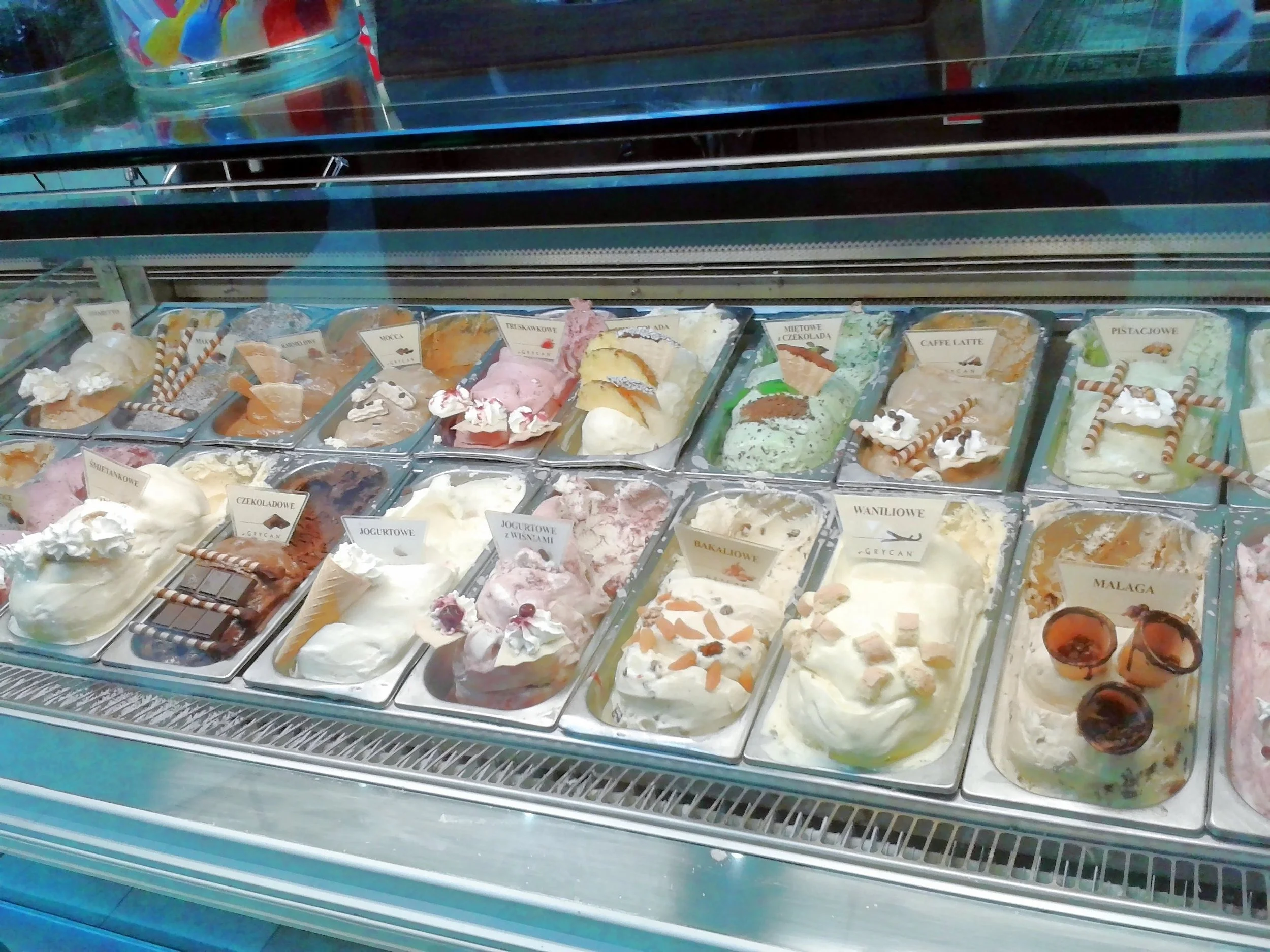
Ten years ago I wrote about the tyranny of choice, and how ice cream parlours and politicians alike assume that more options must be better. The evidence said otherwise then, and it still does. But there is a version of this problem that does more commercial damage than an over-stocked freezer cabinet, and it is the one that sits on your pricing page, in your rate card, or in the quote your sales team just sent out.
The problem is not that customers dislike choice. Ask them and they will always say they want more of it – just as they will always say they want a lower price. The problem is what happens to their behaviour when the choosing gets hard.
The mechanism, not just the symptom
It is easy to assume ‘too much choice reduces sales’ and leave it there. The more useful question is why, because the answer tells you what to fix.
Three things happen when a buyer faces an overloaded set of price options.
First, the decision changes shape. The buyer stops asking "which of these should I buy?" and starts asking "am I confident I can pick the right one?" Those are different questions, where the first ends in a purchase and the second ends (at best) in a deferral. More often it ends in no sale at all.
Second, comparison collapses onto price. This is the most commercially damaging effect and the least discussed. When options differ along attributes that line up cleanly against each other – 100GB versus 500GB, five users versus fifty – buyers can work out which option they need, and can decide what they are prepared to pay for. When options differ along attributes that don't line up – this tier has advanced reporting, that one has API access, the other has a dedicated success manager – the comparison becomes cognitively challenging. Research on ‘attribute alignability’ (Gourville and Soman, 2005, Overchoice and Assortment Type: When and Why Variety Backfires) shows that non-alignable differences make choice harder, not richer. To be clear, ‘non-alignable’ means it’s hard to choose between one option and another because they are unalike. And when the trade-off between things that are hard to compare gets difficult, buyers fall back on the one attribute that can always aligned: the price at the bottom.
Third, uncertainty gets priced in. A buyer who is not sure they have understood what they are buying will not pay a premium for it. Preference uncertainty – not knowing how to weigh the dimensions against each other – is one of the four factors Chernev, Böckenholt and Goodman identified in their 2015 meta-analysis of 99 choice overload studies (Choice overload: A conceptual review and meta-analysis) as reliably making large assortments harmful. The other three are choice set complexity, decision task difficulty, and unclear decision goals. Notice that only one of those four is about the number of options. Complexity is the real culprit; count is just its most visible symptom.
That last point deserves emphasis, because it changes the solution. The instruction is not simply ‘have fewer options’. It is ‘make the choice easy’. Sometimes those are the same thing. Often they are not.
The evidence
The best-known study is still Iyengar and Lepper's supermarket jam experiment of 2000 (When choice is demotivating: Can one desire too much of a good thing?): a tasting table offering 24 jams drew more browsers, but 30% of those who sampled from the 6-jam display bought a pot, against just 3% of those who sampled from the 24.
The pattern holds where the stakes are real. Iyengar, Huberman and Jiang (2004) analysed 401(k) retirement plan data (How Much Choice is Too Much? Contributions to 401(k) Retirement Plans) covering nearly 800,000 employees across around 650 plans. For those who are not American readers, a 401(k) is a pension plan. For every ten additional funds on the menu, participation fell by roughly 2 percentage points. Plans offering a couple of funds saw participation in the mid-70s; plans offering close to sixty saw it drop to around 60%. Employees were walking away from free employer matching money because the menu was too long.
On the commercial side, Boatwright and Nunes, 2001 (Reducing Assortment: An Attribute-Based Approach) studied an online grocer that cut SKUs dramatically across 42 categories. Sales rose an average of 11%, increased in more than two-thirds of categories, and three-quarters of households spent more overall after the cut. Procter & Gamble's reduction of the Head & Shoulders range from 26 variants to 15 is widely reported to have lifted sales by around 10%.
I should be honest about the state of the literature: not every study finds an effect, and a competing meta-analysis by Scheibehenne, Greifeneder and Todd in 2010 (Can there ever be too many options? A meta-analytic review of choice overload) found a mean effect close to zero across the studies it examined.
Why the difference? It comes down to the four ‘factors’ I mentioned above, which were preference uncertainty, choice set complexity, decision task difficulty, and clarity of decision goal. Choice overload is not a universal law – it is something that reliably emerges when these factors are in place. Sadly, many B2B pricing pages and configurable service portfolios meet almost every one of those conditions at once: complex option sets, hard to understand trade-offs, buyers who genuinely don't know their own preference weightings, and a decision goal that is often exploratory (gathering information) rather than committed (buy something right now).
Why we do this to ourselves
Nobody sets out to build a confusing price list. It usually emerges over time, for four reasons.
1. The solution genuinely is complex
A SaaS product costs might scale on data volume, seat count, number of languages supported, integrations, and support tier. Five variables with four bands each is a thousand permutations. The instinct is to share all the details of the model with the customer so they can find their ideal spot in it. The better instinct is to do the work of simplifying it before the customer ever sees it.
2. Options feel like proof of competence
Look at everything we can do. Flexibility is a real virtue, but a price list is a poor place to demonstrate it. What feels, to the company, as a message of capability comes across to customers as ‘these people haven't decided what they are’, or ‘if they’re so hard to work with when I’m deciding to buy from them, what will they be like if they are my supplier?’
3. Nothing ever gets retired
Tiers are added for a deal, a segment, a competitor, a launch. Sometimes, though, they are not removed once their purpose has been served. This is how you end up with something ridiculous such as Essential, Basic, Bronze, Silver, Gold, Platinum and Diamond – seven tiers, of which the buyer can clearly articulate the value difference between perhaps two.
4. Sales asks for it
Every bespoke variant makes one negotiation easier and the next hundred harder.
Four common examples of the problem
1. Multi-variable SaaS pricing
Every cost becomes a customer-facing option. This means the buyer has to know in advance what their own data volumes and user growth will be with some accuracy in order to buy at all. If they are uncertain then it’s easier to go to a competitor who offers simpler, clearer options.
2. Tier proliferation
The seven tiers above is an exaggeration, but five is not that unusual. Generally, three is a good number, partly because of unconscious biases such as the Goldilocks effect, where buyers feel safest choosing the middle of three options. But the tiers have to be meaningfully different. If Silver and Gold differ by two features nobody asked for and 12% on price, the tier structure has stopped doing its job, which is to sort customers by value required and willingness to pay for that value.
3. Automotive options lists
Five model variants, each with dozens of individually priced options, arranged so that it is entirely possible to spend more on a mid-spec car with a few options added than on the high-spec car that includes them. The buyer who discovers this feels foolish, and feeling foolish is not a positive purchasing state.
There is a regulatory dimension here too: under the Digital Markets, Competition and Consumers Act 2024, in force since April 2025, the headline price must include all mandatory fees. A long options ladder that only reveals the real final price at step nine is drip pricing, and it is now firmly in scope of the legislation.
4. Subscription duration menus
A one-week free trial, or monthly, quarterly, and annual payments, with a lifetime option. Five options along a single dimension, which is exactly the situation where buyers stall, because the differences can be aligned enough to invite optimisation (i.e. figuring out which option works best for me) and numerous enough to make optimisation exhausting.
The lifetime subscription carries a second problem: it is bought disproportionately by your heaviest users, which reduces their total lifetime value.
The commercial cost, quantified
This is not only a conversion problem. Excess option count leaks money in several places at once:
Discounting. Every option introduces something the buyer can negotiate over. More negotiation, more erosion of price.
Sales cycle length. Complex quotes take longer to build, longer to explain, and longer to approve on the buyer's side. Increasing the time to decision increases the chance the customer will change their minds.
Quote error and rework. Every permutation is a chance to get it wrong, and errors are almost always resolved in the customer's favour.
Cannibalisation. Poorly defined tiers let customers self-select down. A feature that appears one tier too low costs you the upgrade.
Lost upgrade triggers. Fine-grained tiers with small gaps make the upgrade to a higher tier less obvious. Fewer, larger steps create clearer triggers.
Cost to serve. Every variant needs to be managed, needs price maintenance, needs documentation, training and support, and all of these are costs.
Designing the choice
1. Separate the configuration from the choice
This is the single thing that will have the biggest impact. Segment the buyer before you show them anything, then show only the options relevant to them. For example, if data volume, seats and languages are all cost drivers, package languages into three bands (lets say 1; 2–5; or 6+ languages), put the buyer on the right band, and within it show a per-seat price and a small number of volume bands with a calculator that resolves to one number. The internal model stays as complex as it needs to be. The customer sees a price.
2. Choose one primary value metric
The thing you charge for should be the thing that scales with the value the customer receives, and there should be one of it. Everything else become ‘tweaks’ to the core offer.
3. Three tiers, with deliberate gaps
Good/better/best works because it engages extremeness aversion – Simonson and Tversky's compromise effect (1992; Choice in context: Tradeoff contrast and extremeness aversion). People just go for the middle option in a list of three because it feels safer – also called the Goldilocks bias. This is confirmed by Valenzuela and Raghubir's centre-stage effect (2009; Position-based beliefs: The center-stage effect), where the middle options feels like the more popular option because ‘it takes centre stage’. Make the price gaps large enough to signal a real difference in what you get. And don’t forget the optimum order – best/better/good, i.e. start with the highest price first.
4. Build fences around value, not features
The choice between tiers should track something the customer recognises as a difference in the value they get – scale, speed, solution – and not an arbitrary feature split. A good test: can a salesperson explain why a customer belongs in a given tier, in one sentence, without reading the promotional blurb?
5. Highlight a default
‘Most popular’ or ‘best value’ gives the brain a shortcut and reduces the cost of deciding. Two caveats. It must be true – under the DMCCA and the underlying consumer protection rules, an unsubstantiated popularity claim is a misleading practice. And it should be the option you actually want most customers to choose, since it will become self-fulfilling.
6. Treat the decoy with caution
By and large, I am not a fan of artificial price decoys. They are misleading, and if spotted they lose customer trust. A genuine decoy price is fine, e.g. this could be two options with clearly different value but close in price because the underlying costs are close, where the customer will logically choose the higher value offer.
7. Use a stepped process
Where choices genuinely cannot be reduced, put them into a process where simpler decisions are taken one step at a time. Order them: start with the easy, high-level decisions and move to the granular ones further down the process. If there is a step where the decision is intrinsically harder, start with the easiest steps first.
8. Prune, and keep pruning
Run the analysis: revenue and margin by variant, by tier, by option. There will be a long tail contributing almost nothing while consuming customer attention and requiring effort in the business. Retire them, simplify things down, transfer existing customers where possible to the most appropriate option. Tip – don’t reduce their value and expect to charge the same price! Offer them the choice of less value at a lower price or more value at a higher price.
9. Test rather than assume
Tier structures are testable. So are price gaps, labels, and the number of options shown. Given that the research says that effects often depend on context (in other words, what works in one market might not work in another; and what works with one of your customer segments might have no impact in a different one). You always have to test.
When more choice is right
If variety is the proposition – a flavour-led ice cream parlour, a broad line components distributor, a marketplace (like Amazon!) – then breadth is the product, and the answer is better navigation, filtering, search or recommendations rather than fewer lines or SKUs. Expert buyers with well-formed preferences also suffer less: they know what they want and can find it. The situation that creates problems with price and conversion is not simply ‘too many options’, but is ‘too many options and an uncertain buyer’.
The question worth asking
Take your own pricing page, rate card or quote template to someone who does not work in your business, give them a plausible customer scenario, and ask them to pick. Watch how long it takes, what they ask, and whether they end up choosing on anything other than price.
If they stall, your customers are stalling too. You just don't see it, because the ones who stall don't call.